

The problem usually starts with good intentions.
A capable manager knows the work inside out, so people naturally come to them for answers. A quick question here. A small approval there. A final sense check before something goes live. None of it feels especially heavy in the moment, which is exactly why it builds so easily.
Before long, the manager has become the route every decision has to pass through. The team waits and the work slows. The leader spends more of the day clearing blockers than doing the work only they can do.
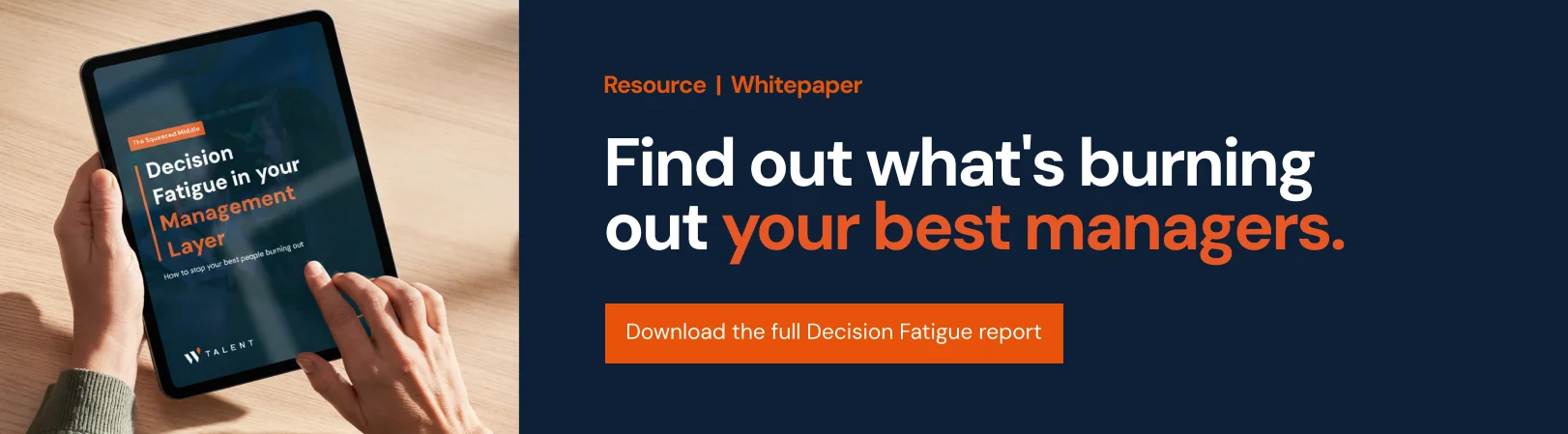
That is one of the issues explored in our Decision Fatigue Report 2026. When decision making sits too tightly around one person, it creates a bottleneck that drains managers and limits the team around them.
The answer is not to step back and hope people figure it out. Leaders need to turn the knowledge in their heads into clear rules, principles and boundaries. Once the team understands how decisions should be made, trust becomes much easier to give.
The hidden cost of being the answer to everything
Decision fatigue does not usually arrive as one dramatic moment. It comes through dozens of small calls made across the day.
A manager signs off a small expense. They settle a disagreement between two people. They check whether a piece of work meets the standard. They get pulled into a scheduling issue that someone else could probably solve with the right context.
Each decision looks manageable on its own. Together, they create a constant drag on attention.
The Decision Fatigue Report 2026 points to a familiar pattern. When managers are overloaded, they are more likely to default to the safest option, avoid risk and make reactive calls. That has a direct effect on the team. Projects take longer because people are waiting for permission. Good ideas stall because nobody feels sure they can move without sign off.
Over time, the team learns to escalate rather than decide. That is where the real damage starts.
Managers need to become architects of the work
The goal is not a free for all. Teams still need standards, boundaries and a clear sense of what matters.
The difference is where the manager spends their energy. Instead of approving every small step, they design the conditions that allow good decisions to happen without them being in the middle each time.
That means giving people enough context to understand the trade offs, enough authority to act, and enough clarity to know when something needs to be escalated.
This is where guardrails matter. Good guardrails tell the team what they own, where they have room to move, and which decisions still need senior input. They reduce the need for constant checking because people can see the logic behind the boundaries.
Trust becomes much easier when the team is working from shared principles rather than trying to guess what their manager would say.
Turn knowledge into something the team can use
A lot of managerial knowledge never gets written down. It sits in someone's head because they have been close to the work for years.
That knowledge is useful, but it becomes a problem when the team can only access it by asking the manager. If every exception, standard and judgment call depends on one person, the organisation has not really delegated. It has only moved the queue to a different desk.
The Decision Fatigue Report 2026 sets out a practical way to reduce that load. Managers need to make the unwritten rules visible, especially around four areas:
- The principles that guide daily work and operational choices.
- The standards that define what good work looks like.
- The security, compliance and risk boundaries that cannot be crossed.
- The levels of authority people have for spending, delivery and project decisions.